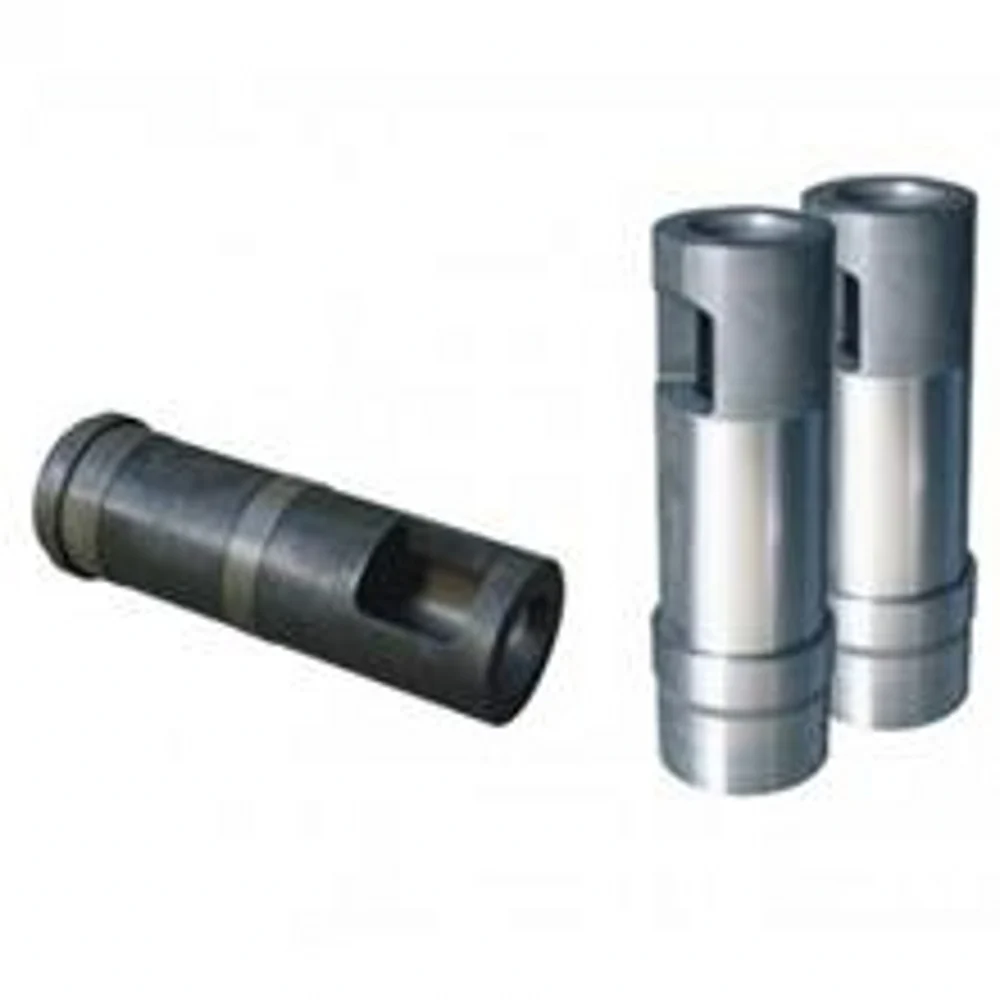
Use the listed sizes to identify a starting point, then match the sleeve’s geometry to the machine and plunger assembly.
Where the Shot Sleeve Fits in Die Casting
In cold-chamber high-pressure die casting, the shot sleeve receives molten metal before the plunger drives it toward the die. Bruschi’s machine-process overview distinguishes this separately filled chamber from the immersed chamber of a hot-chamber system. For equipment context, see our pressure die casting machine directory.
The sleeve arrangement belongs to a particular process and machine design. Our hot-chamber and cold-chamber process comparison explains the different metal-delivery arrangements.
Standard and Custom Sleeve Diameter Lists
YOMATO lists these discrete sleeve diameters, in millimeters:
| Supply category | Listed diameters (mm) |
|---|---|
| Standard sleeve | 40, 50, 60, 70, 80, 90, 100, 110, 120, 130, 140, 150, 160, 170, 180, 190, 200 |
| Custom sleeve | 45, 55, 65, 75, 85, 95, 105, 115, 125, 135, 145, 155, 165, 175, 185, 195, 205 |
The diameter labels do not specify inner or outer diameter. Identify the required dimension on the part drawing before treating a listed size as a match. A complete drawing also lets you distinguish the working bore from the outside profile and mounting features.
Check the Sleeve and Plunger Interfaces Together
A shot sleeve in die casting has several interfaces to review. The working bore relates to the plunger tip; the outside profile locates the sleeve in the machine; the length and end features establish how it meets the surrounding assembly. The pouring opening has its own size, position and orientation.
Review those features together on the existing sleeve drawing. Note any shoulders, grooves or threads used for location, and distinguish fixing holes from fluid connections. The HTS shot-sleeve data sheet provides an industry example of how dimensions, connection holes and fixing holes are documented separately.
Use the drawing revision to track changes to the tip or sleeve.
What Wear Can Tell You About the Application
Look at where the shot sleeve wears during die casting. The area beneath the pouring opening experiences a different heating pattern from other parts of the sleeve. Uneven heating can distort the sleeve, affecting its shape and the plunger’s movement. Castool’s technical overview of shot sleeves explains this relationship between temperature distribution, sleeve geometry and tip fit.
Record the location of erosion or scoring, the condition of the plunger tip and any change in its movement. Keep the existing cooling and lubrication arrangement in that record. Those observations help distinguish a dimensional replacement question from a wider operating-condition review; they don’t establish a service-life prediction from the size alone.
Special Sleeve Requests
YOMATO can supply special sleeves according to your requirements. For a useful starting brief, bring the dimensioned sleeve drawing, machine identification, matching plunger reference and alloy or process context together. Add the wear observations if the request concerns a replacement, and indicate the required quantity.
Send the brief to sales@hotchamberdiecasting.com.
Questions and answers
Can a special sleeve be requested outside the two lists?
Yes. YOMATO’s sleeve offer includes special sleeves according to requirements. The listed diameter steps do not define a continuous size range.
Why keep the pouring opening on the replacement drawing?
Its position and orientation locate the point where metal enters the sleeve. Preserve that information alongside the sleeve’s end and mounting features, so the drawing describes the metal-entry arrangement as well as the overall shape.
Should sleeve wear and plunger-tip wear be reviewed separately?
Record them together. The plunger travels through the sleeve, and their condition is related. Include both surfaces in the replacement review; that gives the geometry and operating observations a common reference.