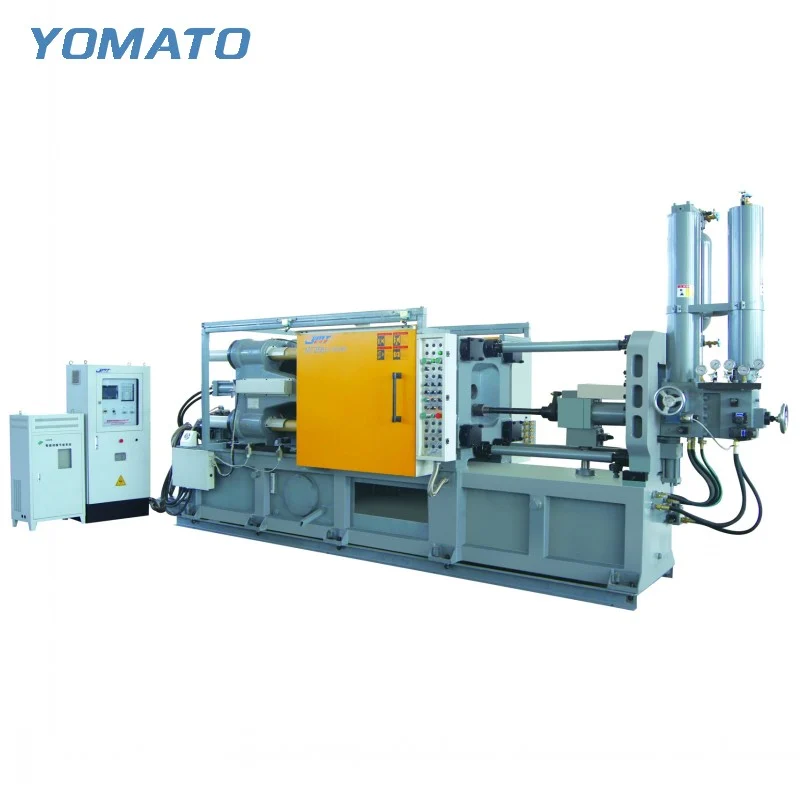
The mechanical table below covers MT130, MT160, MT200, MT230 and MT258, with clamping force, die-space, movement and plunger-diameter fields kept together. Use it to review the equipment’s physical interfaces and the surrounding metal-transfer layout.
Cold Chamber Die Casting Machine: MT Equipment
A cold chamber pressure die casting machine receives molten metal in a separate shot sleeve before injection. NADCA’s cold-chamber description explains the ladle and plunger arrangement. This separates the metal-transfer task from the machine’s die-closing task.
The MT offering provides a mechanical reference for that equipment discussion. For the wider process distinction, see our hot- and cold-chamber comparison. The process name describes the feed arrangement; the model’s mechanical data describe the equipment interfaces.
Aluminum Die Casting Machine Application
YOMATO’s aluminum equipment offering includes the Aluminum Die Casting Machine 200Ton. For an aluminum die casting machine project, retain the specified alloy alongside the mechanical envelope, die movement and shot-unit interfaces in the shared MT table below.
MT Mechanical Specifications
The MT cold chamber die casting machines below share this mechanical reference. These aluminum pressure die casting machine specifications retain the listed units and model columns, so each field can be read against the same machine.
| Item | Unit | MT130 | MT160 | MT200 | MT230 | MT258 |
|---|---|---|---|---|---|---|
| Clamping Force | KN | 1300 | 1600 | 2000 | 2300 | 2600 |
| Platen Size(HxV) | mm | 680x680 | 680x680 | 760x740 | 780x780 | 820x820 |
| Space Between Tie Bars(HxV) | mm | 430×430 | 460x460 | 490x490 | 510x510 | 530x530 |
| Tie Bar Diameter | mm | 75 | 85 | 90 | 95 | 100 |
| Mold Height(Min.-Max.) | mm | 250~500 | 200-550 | 200-550 | 200-600 | 250-600 |
| Clamping Stroke | mm | 350 | 360 | 380 | 400 | 430 |
| Ejection Stroke | mm | 80 | 80 | 80 | 90 | 90 |
| Ejection Force | KN | 100 | 100 | 130 | 130 | 130 |
| Injection Plunger Diameter | mm | 40,50,60 | 40,50,60 | 50,60,70 | 50,60,70 | 50,60,70 |
| Machine Weight | KG | 4700 | 6400 | 7700 | 8800 | 9300 |
Read a field across its model columns or follow one model down through the different interfaces. Clamping force, mounting geometry, movement and machine weight describe different requirements. The pressure-machine specification directory provides the broader equipment reference.
Shot Unit and Metal-Transfer Interfaces
For aluminium pressure die casting, the machine’s shot unit has to be considered together with the metal-transfer arrangement. The table lists injection-plunger diameter choices; it does not turn a diameter into a casting-weight figure.
Keep the sleeve and plunger references paired when reviewing replacement or installation interfaces. Our shot-sleeve page explains the geometry information used in that discussion. The plunger-tip page covers the corresponding component offer.
Die Space, Opening and Ejection
The MT200 table entry illustrates why the mechanical fields need separate labels. Its mold-height range is 200-550 mm, clamping stroke is 380 mm and ejection stroke is 80 mm. These values describe different parts of the die installation and movement; they should not be combined into a single size.
Platen size and tie-bar space are also different fields. Retain the mounting and clearance information alongside the opening and ejection requirements when reviewing a die. This keeps the discussion about the actual interfaces instead of a model name or one force value.
Project Scope and Installation Support
Prepare one equipment brief with the alloy, part and die information, machine interfaces, existing furnace and cell layout, and required handling tasks. Identify which surrounding equipment will remain in place so the machine and peripheral scope can be discussed together.
YOMATO can arrange technicians to assist with installation and trial running when necessary. Technical training is provided according to users’ needs. Send the brief to sales@hotchamberdiecasting.com for the equipment discussion.
Questions and answers
How does a die casting machine work?
In a cold-chamber arrangement, molten metal is ladled into the sleeve before a plunger injects it into the locked die. Metal transfer and injection are separate tasks within that sequence.
How to calculate die casting machine tonnage?
NADCA identifies machine tonnage as clamping force, holding the die halves closed during injection. The review must establish enough clamping force to hold the actual die closed under its intended injection conditions, then separately check die fit and opening/ejection movement. Model digits and part weight alone do not establish either requirement.
What are the downsides of die casting?
The machine, die and metal-feed sequence need to work together. Cold-chamber feeding adds a transfer task between the furnace and sleeve. Include that layout and its equipment handoff when reviewing the project, rather than considering the casting machine alone.
What is aluminium die casting?
It is the pressure casting of aluminum alloy into a die. In the cold-chamber arrangement described here, metal reaches the injection mechanism from a separate furnace. The MT page combines the aluminum equipment identity with its mechanical specification fields.
Which dimensions matter for an aluminium die casting machine?
Keep platen size, tie-bar space and mold-height limits as separate dimensions. Add the clamping and ejection strokes to describe movement. These fields provide different information about installing and using the die on the machine.