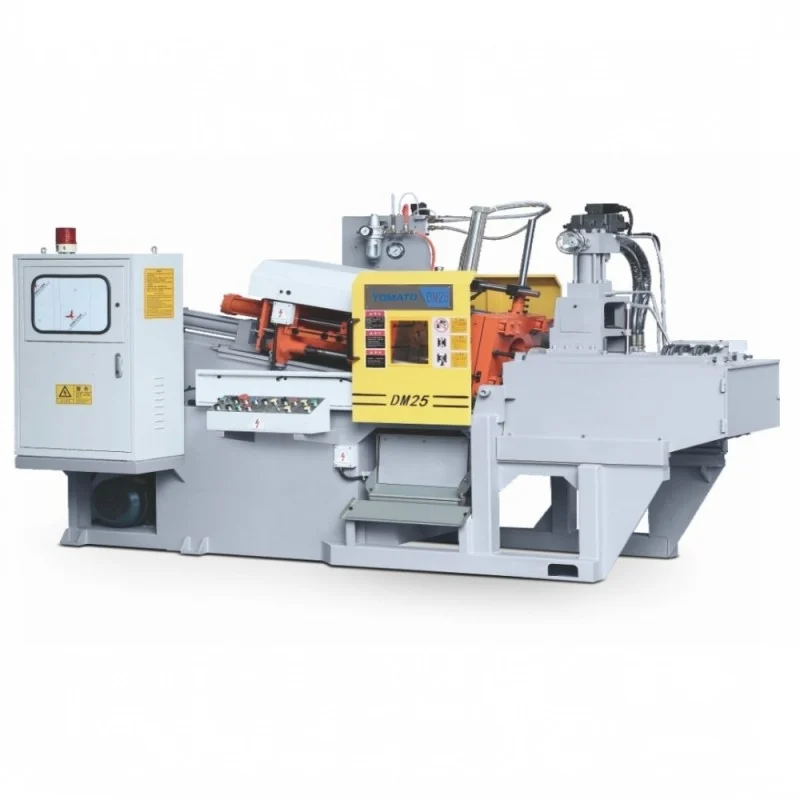
Start with the machine functions and package choices below, then relate them to your die and production cell. DM15 and DM38 identify machines in the series; the final configuration depends on the application.
DM Hot-Chamber Equipment for Zinc Casting
A zinc casting machine brings the metal-delivery system and mold-closing system together. In a hot-chamber process, the pressure chamber sits in the molten metal; a plunger sends metal through the gooseneck and nozzle into the die. Bruschi’s explanation of the press and its components illustrates this general arrangement.
For the operating sequence, follow our hot-chamber die casting process guide. The DM page focuses on the equipment package: which controls belong to the series, which furnace is standard, and which peripheral systems are optional.
Injection and Mold-Control Functions
DM machines have two-stage injection control. Their mold-opening and mold-closing functions use multi-stage pressure control, with low-pressure mold-close protection. These controls address the shot sequence and movement of the mold.
For a zinc pressure die casting machine project, review both alongside the die and alloy: the Zinc Die Casting industry discussion of machine and process technology treats the machine, tool, material, operator and process as interacting parts of production.
Standard Furnace and Optional Systems
The furnace and peripheral systems affect the scope of your equipment package. Use these distinctions when comparing quotations:
| System | DM configuration |
|---|---|
| Electric melting furnace | Standard |
| Fuel or natural-gas furnace | Available for special requirements |
| Servo system | Optional |
| Air ejection and spraying systems | Optional |
| Conveying system | Optional |
Think through the sequence around the machine: removal of the casting, die preparation and movement of the part to the next operation. Record which tasks your existing cell already handles and which belong in the new package. That gives each option a defined role in the project.
Relate the Configuration to Your Die and Cell
Prepare the application details as one technical brief. Identify the alloy, casting geometry, cavities and total shot mass including runners. Add the die drawing, its overall dimensions, opening needs and ejection arrangement. These describe the job the machine and tool must perform together.
Plant details complete the picture: the available heat source, the planned part-handling route and the equipment that will remain in the cell. A replacement machine and a new cell can therefore need different packages even when producing similar parts. You’ll find the wider equipment context in our pressure die casting machine directory. Compare the required mechanical interfaces against the actual model specification before fixing the package.
Installation and Operator Training
YOMATO can arrange technicians to assist with machine installation and trial running when necessary. Technical training is provided according to the user’s needs. Put the intended installation scope and operator-training requirements alongside the application brief so they form part of the project discussion.
Send the brief to sales@hotchamberdiecasting.com to discuss a DM configuration. Include the furnace choice and the peripheral tasks identified above, so the conversation starts with a defined equipment package.
Questions and answers
Does a DM model number state its clamping capacity?
No. DM15 and DM38 are model identifiers. Use the specification for the particular machine to establish its clamping force and mechanical envelope; don’t convert the digits in a model name into a capacity.
What does low-pressure mold-close protection refer to?
It refers to the mold-closing function on the machine. It doesn’t change the equipment’s classification into a low-pressure casting process. Keep that wording with the mold controls when preparing an equipment comparison.
Is the servo system included as standard?
The DM servo system is optional. If you’re comparing packages, list the servo system as its own configuration item so the quoted scope is clear.